

The Trump strategy of suffocating pressure on Cuba – Scenarios of regime collapse and emergency intervention plans
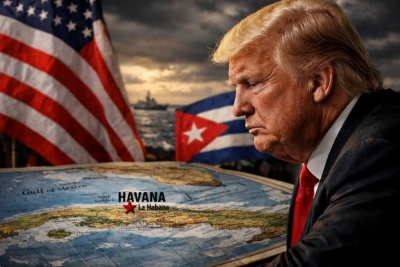
The administration of Donald Trump is preparing for the possibility of the collapse of Cuba's communist regime as early as this summer, according to Axios, while, according to US officials, it has already drafted alternative military plans to address potential destabilization on the island. Despite these preparations, Trump has not approved a military invasion and, according to government sources, prefers a peaceful transition of Cuba to a different political system. However, Washington intends to continue intensifying economic sanctions, seeking the gradual economic weakening of the Havana regime. As a senior US government official told Axios, this approach could be described as a form of "accelerationism," aimed at speeding up political developments. "We are not seeking an immediate regime change. There is a specific plan and it is evolving gradually," he stated characteristically.
Aiming for the complete economic isolation of Havana
The Trump administration's strategy aims to eliminate the influence Cuba has exerted in Latin America since the 1959 revolution of Fidel and Raul Castro. According to the report, the first step was the weakening of Cuba's main source of support, namely Venezuela and its socialist leader Nicolas Maduro. Washington believes that oil shipments from Venezuela were a key factor in the survival of the Cuban economy. After the capture of Maduro by US forces on January 3, free oil shipments to Cuba were cut off, causing a new economic crisis in the country. The US attributes Cuba's economic hardships to the regime's own policies, while Havana blames US sanctions for the dramatic state of the economy.
Military scenarios and preparation for a potential crisis
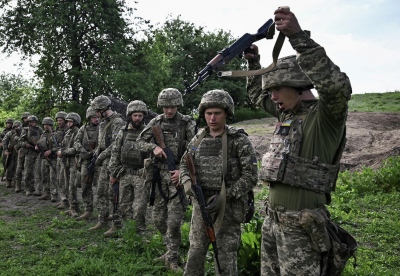
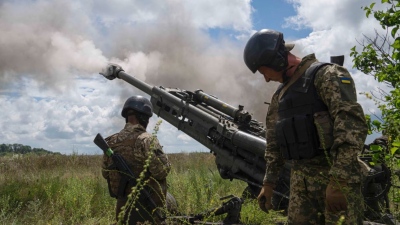
Last month, the United States Southern Command (SOUTHCOM), which is responsible for military operations in the Caribbean, conducted a multi-agency simulation exercise focusing on potential developments in Cuba. According to US officials, scenarios of social unrest, the use of drones by Cuba, and ways for the US to react in case of widespread incidents were examined. "All options are on the table, but there is no plan for an immediate invasion. If the President gives the order, we are ready for any development," a government source said. American analysts estimate that the deterioration of living conditions, power outages, and food shortages could lead to a new wave of protests during the summer. It is recalled that the mass mobilizations of July 11, 2022, were violently suppressed by Cuban authorities, with hundreds of protesters arrested.
Economic warfare through new sanctions
Trump's strategy is based primarily on economic pressure. On May 1, he signed an executive order imposing secondary sanctions on companies that cooperate with the Cuban military and business conglomerate GAESA. The sanctions have already led companies such as Canada's Sherritt International and shipping groups CMA CGM and Hapag-Lloyd to suspend operations in Cuba. US officials estimate that similar moves will follow by financial institutions and hotel groups from Spain, Panama, and Mexico. "We haven't seen pressure of such intensity against Cuba before. This is an entirely new framework of sanctions," said former US Treasury official Max Meizlish.
Central role for Marco Rubio
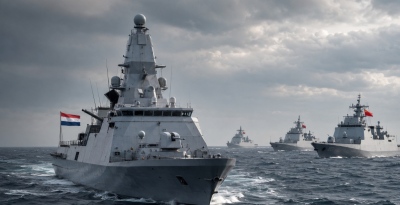
Secretary of State Marco Rubio plays a decisive role in shaping Trump's policy for Latin America. Rubio is at the forefront of the campaign against GAESA and officially announced the new sanctions on May 7. At the same time, the US Department of Justice released an indictment against Raul Castro for the 1996 downing of aircraft belonging to the organization Brothers to the Rescue. Simultaneously, SOUTHCOM announced the deployment of the Nimitz aircraft carrier strike group to the wider region.
Why Cuba is not Venezuela
Despite comparisons to the Maduro case, Trump administration officials point out that there are significant differences. First, Washington has not yet identified individuals who could lead a transitional government in Havana in the event of the current regime's collapse. Second, the removal of Raul Castro would not automatically lead to a political realignment, as the power system in Cuba has been decentralized in recent years. Third, the US embargo against Cuba is codified by Congress and cannot be unilaterally lifted by any given President, as happened with a portion of the sanctions against Venezuela.
Simultaneous economic aid
Washington's policy is not limited to sanctions alone. During May, the US announced a $100 million aid package for the Cuban people, with the funds to be managed through the Catholic Church and charitable organizations rather than the Cuban government. A senior Trump administration official argued that the goal is to prove to the citizens of Cuba that they can have a better life without the restrictions of the current regime. For his part, Cuban Foreign Minister Bruno Rodriguez Parrilla accused Washington and Marco Rubio personally of attempting to create the appropriate political climate for a potential future military intervention.
"Time is not on the side of the regime"
According to US officials, the situation remains extremely complex both in Cuba and the United States, due to political balances and the reactions of the Cuban-American community. However, the prevailing assessment in Trump administration circles is clear: "The politics are complicated on both sides of the Florida Straits. But we have time. The regime in Cuba does not."
www.bankingnews.gr

Σχόλια αναγνωστών